
Emily Griffith @ Lil Bucks
Building America's Buckwheat Brand
Emily Griffith is the founder and CEO of Lil Bucks. Lil Bucks is supporting regenerative agriculture with its organic and regenerative organic sprouted buckwheat products.
The Brand
Launched in 2018, Lil Bucks is America's buckwheat brand. The product lineup includes 3 SKUs of Lil Bucks sprouted buckwheat crunch that consumers can add to smoothies, oatmeal, yogurt, salads, and more; 5 SKUs of Clusterbucks superfood clusters; and Everything Bucks seasoning that is similar to the “everything bagel” seasoning but with the superfood benefits of buckwheat. The Lil Bucks brand is sold in classic natural food stores like Whole Foods and Bristol Farms and conventional grocers like HEB, Kroger, and Albertsons, with Clusterbucks accounting for about 75% of the business right now. Lil Bucks is committed to sourcing regenerative ingredients, starting with its sprouted buckwheat seeds and now exploring things like maple syrup, coconut, cocoa, and more.
View this post on Instagram
Following Her Heart and Mouth
The Lil Bucks story begins Down Under. After a few years of writing tweets for Four Loko™ and Hormel's Spam™, Emily was looking to reconnect with her passion and interest in health & wellness. She returned to the Aussie lifestyle she came to love while studying abroad in college. One morning, sitting in a Banda café, she was offered a choice between traditional granola or buckwheat as the topping for her acai bowl. That one bowl topped with buckwheat made Emily "buck wild" for this delicious and nutritious food.
“Those seeds became an obsession. I loved the texture and felt amazing after eating it, energized, and satisfied for hours. I realized I had to know more about these seeds.” - Emily
A Commercially Viable Cover Crop
In 2017, Emily moved back to Chicago. Hungry to tweet about something better than canned meat, she dug into buckwheat. Turns out, it’s an incredible crop for both human and planetary health. It’s high in plant-based protein and prebiotic fiber while being gluten and grain free. Buckwheat grows well in cold climates, flowers in just 77 to 90 days, and is extremely beneficial in many organic grain rotations. And unlike most cover crops grown for soil health, buckwheat is edible and commercially viable. Buckwheat seeds can be sprouted and eaten as is, buckwheat flour can be used in baking mixes, and the hulls can even be used as a filling for pillows! (check out Lil Bucks' epic sustainability page with more info here).
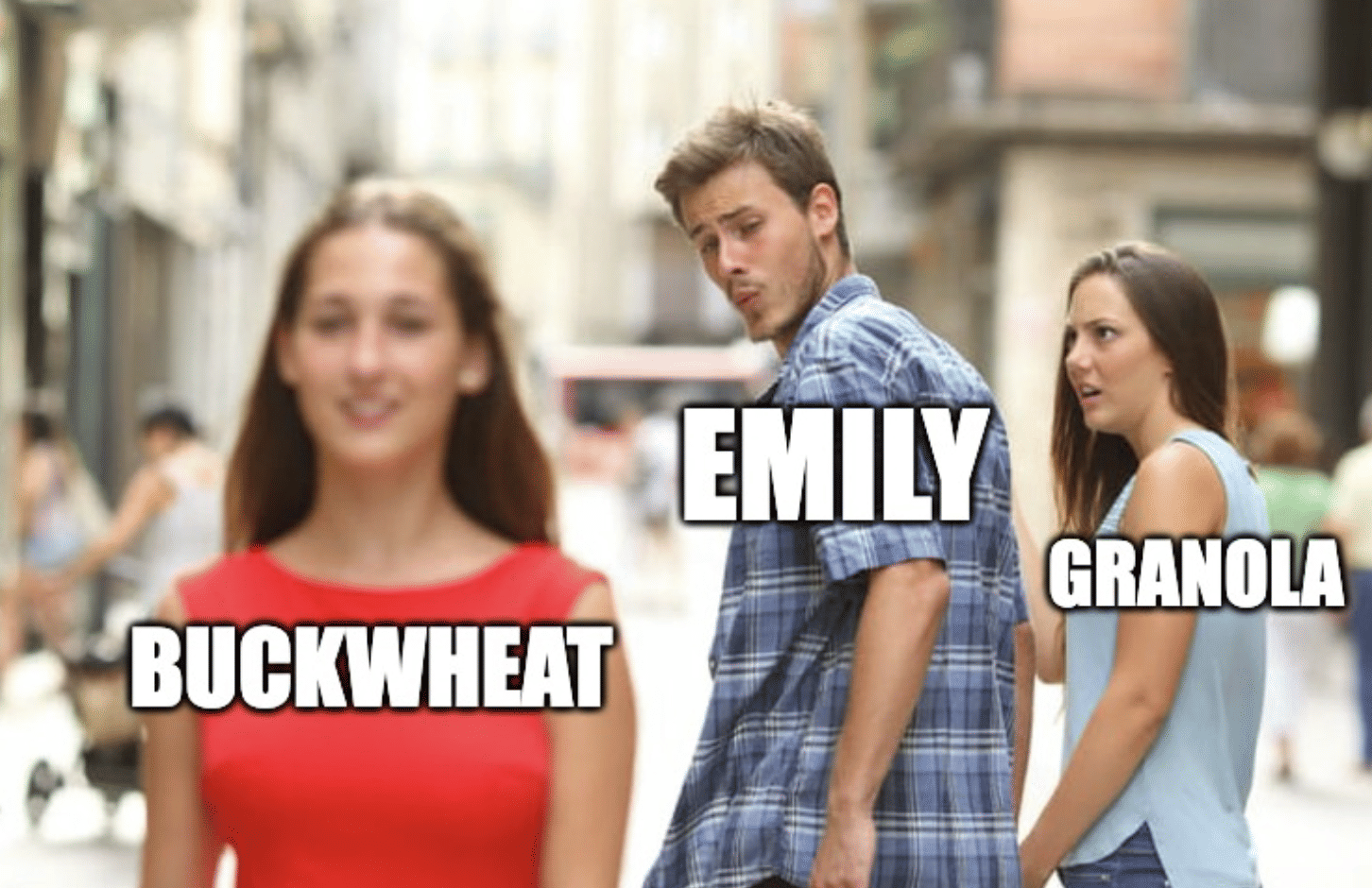
Buckwheat has entered the chat ⬇️ 😂

While most people are familiar with cooked buckwheat (e.g., kasha, soba noodles, buckwheat flour in bread or pasta), sprouted buckwheat seeds can also be a highly nutritious food for humans. Once dehydrated, these sprouted seeds offer infinite potential as a “crunch” ingredient.
From her first taste in Banda to mentions of buckwheat as a carbon sequester in Yvon Chouinard's Let My People Go Surfing to her initial conversations with farmers willing to grow buckwheat at a loss just for the soil health benefits, the universe was laying hints. It was time to bring buckwheat to the people through a brand, and Lil Bucks was born.
“I found these organic buckwheat farmers from a list online and started calling them. Some of them spent an hour on the phone with me, telling me about the U.S. agriculture system and how they’d love to grow buckwheat. But there wasn’t a big market for it, and some of them had grown buckwheat even at a loss just to improve their soil health. I said cool, I’ll make a market for you – how hard can it be?” - Emily
Fortuitous Obstacles
While it’s hard to see it at the time, some things happen for a reason. Not long into her product launch, sprouting seeds in a shared kitchen in Chicago and selling buckwheat crunch direct to consumers, COVID hit. Emily’s best-laid plans to launch Lil Bucks into Whole Foods Midwest derailed when all sampling was canceled. She quickly shifted to a format more familiar to consumers and better suited for mass-market adoption, launching Clusterbucks to tap into a thriving single-serve, snack market.
Fast forward a few years, and the war in Ukraine dried up principal international buckwheat sources in Russia, China, and Ukraine, solidifying Emily's already-established mission to source from the U.S. Then Emily met Luke Peterson of A-Frame Farm, they decided to work together, and they've never looked back. Together, they’re now teaming up with Mad Agriculture to build a market and supply chain for regenerative organic buckwheat while measuring both its nutritional and environmental impacts.
View this post on Instagram
Funding too remains an obstacle, particularly for women and first-time founders. For Lil Bucks in particular, there are the challenges of an unproven product concept, finding the right market, consumer adoption, and the whole regenerative story. The financing mechanisms are there for farmers and traditional CPG brands, but none specifically for regen brands. Despite all the talk about holistic solutions and changing the food system, Emily says the time is now for investors to funnel equity, debt, and philanthropic capital downstream to the brands.
“We’re putting out a lot of capital upfront to buy regenerative ingredients. We wouldn't be in this cash position if we just sourced regular buckwheat from commodity markets. But because we want to support regenerative crops and create opportunities for farmers, we have to contract like $150,000 plus of ingredients, bought all at once at the end of the harvest. Everyone wants the mission but where’s the funding?” - Emily
Our Path to 50% Market Share 4 Regen
Buckwheat is an amazing product and regenerative superstar, but how do you communicate this to the consumer? Yes, it’s gluten-free, grain-free, and has high protein and antioxidants, but how do you convince consumers that it also tastes great and educate them on all its uses? These are questions Emily has labored over during her five-year journey.
Emily sees storytelling as a key unlock – connecting buckwheat to human health and bringing farmer stories to life.
“When I worked at Hormel Foods, we were begging them to share more stories about their actual producers. That’s what people want – a connection to their food. At Lil Bucks, we’ve learned the importance of not only telling people this is delicious and this is how you eat it, but also adding that it’s good for you and the planet. Post-purchase, we’re making them feel good about it, connecting brands to the farms.” - Emily
You can check out the full episode with Emily from Lil Bucks HERE.
Subscribe to future episodes of the ReGen Brands Podcast on your favorite podcast platform using the buttons below. You can help support our mission of growing regenerative CPG brands with a 5-star rating!
Stay engaged in the conversation by subscribing to our weekly newsletter, The ReGen Brands Weekly, and connecting with us on LinkedIn (Kyle & AC).
Your support of the show and these brands truly means the world to us. Thank you!
This ReGen Recap was produced with support from Kristina Tober